
Large-scale construction projects succeed or fail long before crews arrive on the job site. Careful planning creates the structure needed to manage hundreds of decisions involving design, labor, equipment, permits, safety, materials, inspections, and scheduling. Without a coordinated plan, even a well-funded project can experience delays, cost overruns, communication breakdowns, and quality concerns.
The planning process should transform a broad idea into a practical sequence of clearly defined activities. Every stakeholder must understand what is being built, who is responsible for each phase, when major milestones must be completed, and how decisions will be documented. Project leaders also need systems for monitoring progress, handling changes, and resolving problems before they disrupt other work.
A successful plan does not attempt to predict every possible complication. Instead, it creates enough structure and flexibility to help the project team respond intelligently when conditions change. By defining the scope, evaluating the site, building a realistic budget, coordinating equipment, and maintaining strong communication, project owners can reduce uncertainty and keep complex work moving toward completion.
Define the Project Scope Before Any Work Begins
The first practical step is to define exactly what the project must accomplish. A detailed scope should identify the size and purpose of the structure, required features, performance expectations, site limitations, regulatory requirements, and final deliverables. Vague descriptions create room for conflicting assumptions, which can lead to redesigns and expensive change orders later.
Project owners should document both what is included and what is excluded. For example, the scope might cover utility connections and exterior paving but exclude future tenant improvements. These distinctions help prevent misunderstandings when bids are requested and contracts are prepared. The scope should also establish quality standards, sustainability targets, accessibility requirements, and any operational deadlines that cannot be moved.
An experienced construction company can help translate project goals into a realistic sequence of work. During early planning, the contractor can evaluate constructability, identify scheduling conflicts, and point out design choices that may create unnecessary complexity. This involvement is especially valuable before drawings are finalized because changes are generally easier to manage while the project remains on paper.
The project scope should also establish a clear approval process. Owners, architects, engineers, and contractors need to know who can authorize design changes, spending adjustments, and schedule revisions. Assigning decision-making authority early prevents delays caused by unresolved questions or competing instructions.
Evaluate the Site Thoroughly Before Breaking Ground

A thorough site evaluation provides information that affects nearly every later decision. Before construction begins, the project team should review property boundaries, access points, soil conditions, existing structures, drainage patterns, utility locations, environmental restrictions, and nearby properties. Surveys and geotechnical reports can reveal issues that are not visible during a basic walk-through.
When old buildings, pavement, or other structures occupy the property, the team may need a demolition service to remove them safely. Demolition planning should address hazardous materials, utility disconnections, dust control, recycling opportunities, noise limits, and disposal requirements. The sequence must also protect structures or infrastructure that will remain in place.
After removal and clearing, excavating services may be required for grading, trenching, drainage work, utility installation, or preparation of building areas. Excavation plans should account for soil stability, groundwater, erosion control, and the movement of trucks and machinery throughout the site. Poor coordination at this stage can create settlement problems or interfere with later utility and foundation work.
Site logistics deserve equal attention. Project leaders should identify delivery routes, worker parking, equipment storage, material staging areas, temporary fencing, and emergency access. Planning these details before mobilization reduces congestion and helps crews work safely without repeatedly relocating supplies or machinery.
Create a Detailed Budget That Accounts for Every Phase
A large project budget should reflect the complete cost of turning the design into a finished, usable structure. In addition to labor and major contracts, the estimate should include permits, design fees, inspections, temporary utilities, insurance, security, site controls, testing, equipment, cleanup, and closeout activities. Small omissions can become significant when repeated across a long project.
Material planning deserves particular attention. The price and availability of each building material can affect both the budget and schedule. Procurement teams should identify long-lead items early, confirm specifications, and determine when orders must be placed. Purchasing too late may stop work, while ordering too early can create storage problems or expose products to damage.
Waste management must also be planned from the beginning. A construction dumpster rental should be scheduled according to the amount and type of debris expected during each phase. The team may need separate containers for general waste, concrete, metal, wood, or recyclable materials. Proper separation can improve site organization and help the project meet environmental requirements.
A contingency fund should be included for unknown conditions and legitimate scope adjustments. The amount should reflect the project’s complexity, design completeness, and site risks. Contingency funds should not be treated as available spending. Every use should be documented, approved, and tracked so decision-makers always understand the remaining financial protection.
Secure the Equipment Needed for Efficient Operations
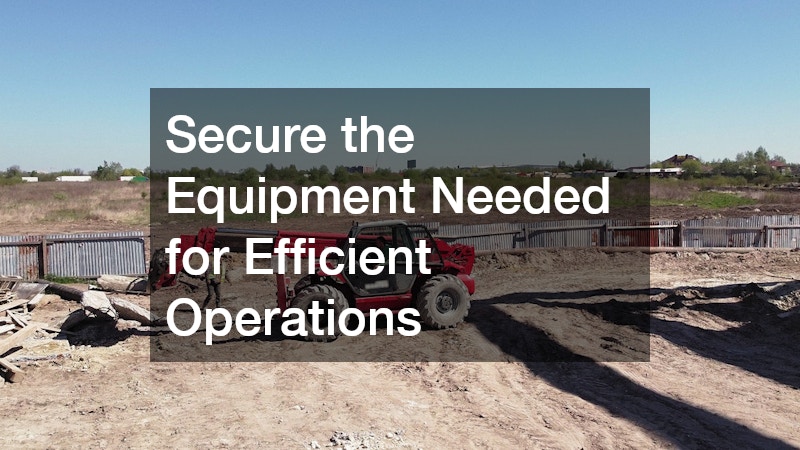
Equipment planning should begin with a phase-by-phase review of the work. The team needs to determine what machinery is required, how long it will be needed, who will operate it, and where it can be stored safely. Equipment schedules should align with the master construction timeline so machines arrive when crews are ready to use them.
Heavy equipment rental can be more practical than purchasing machinery that will only be used temporarily. Renting may also provide access to newer equipment, maintenance support, and attachments suited to specific tasks. However, rental agreements should be reviewed for delivery fees, operating-hour limits, fuel requirements, damage responsibilities, and return conditions.
Moving oversized machinery requires separate coordination. A qualified heavy hauler may be needed to transport cranes, excavators, loaders, or other large units. Route planning should consider bridge limits, road restrictions, permits, escort vehicles, delivery windows, and space for unloading. A delay in transporting one critical machine can affect several connected activities.
Project managers should also plan routine inspections and preventive maintenance. Operators must report warning signs promptly, and backup options should be identified for equipment that is essential to the schedule. Daily checks, trained operators, and organized fueling procedures reduce breakdowns and improve job-site safety. Equipment should never be delivered simply because space is available; every arrival should support an active phase of work.
Build a Reliable Team and Communication Plan
Complex projects depend on coordinated specialists rather than a single crew. Owners may need architects, engineers, general contractors, trade subcontractors, inspectors, testing professionals, suppliers, and safety personnel. Each participant should be selected based on experience, licensing, capacity, financial stability, and familiarity with projects of a similar scale.
The required construction services should be divided into clearly defined work packages. Contracts and scopes should identify responsibilities, deadlines, submittal requirements, quality standards, cleanup expectations, and coordination duties. Overlapping scopes create disputes, while missing scopes leave important tasks without an assigned party.
Supplier reliability is equally important. A concrete construction supply partner, for example, must be able to meet specifications, production volumes, testing requirements, and delivery schedules. Project teams should verify lead times and identify alternative sources for critical products. A supplier’s inability to meet demand can slow multiple crews and create expensive standby time.
Communication should follow a documented process. Weekly coordination meetings can review safety, progress, deliveries, inspections, design questions, and upcoming work. Daily field reports should record labor, weather, completed activities, visitors, delays, and significant site conditions. Requests for information, submittals, and change orders should be tracked through a shared system rather than scattered across calls and individual emails.
Clear communication does not mean involving everyone in every decision. It means directing accurate information to the people who need it while maintaining a record that can be reviewed later.
Prepare the Site for Structural Work
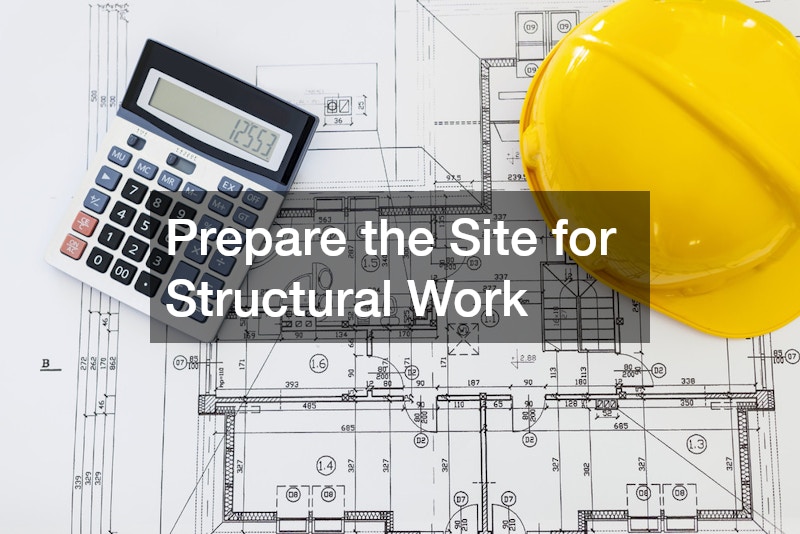
Before structural activities begin, the project team must confirm that the site is ready to support the building as designed. Grading should match approved elevations, drainage measures should be functioning, and underground utilities should be installed or protected. Surveyors should verify layout points so structural elements are positioned accurately.
Soil preparation is especially important. Depending on the geotechnical recommendations, crews may need to remove unsuitable soil, place engineered fill, compact material in controlled layers, or improve drainage. Testing should confirm that compaction and bearing conditions meet the design requirements. Skipping these checks can result in settlement, cracking, and long-term structural damage.
Foundation installation should proceed only after layouts, excavations, reinforcing materials, forms, and embedded items have been inspected. Openings for utilities and future connections must be coordinated before concrete is placed. Correcting missing penetrations later can be difficult and may weaken finished components.
Weather conditions must also be considered. Heavy rain can damage excavations, while extreme temperatures can affect concrete placement and curing. The team should protect exposed soil, maintain safe access, and schedule inspections with enough flexibility to handle changing conditions. Photographs, test reports, and inspection records should be organized as work progresses, creating documentation that verifies compliance and supports future maintenance or warranty needs.
Monitor Progress and Adapt Throughout Construction
Once work is underway, the original plan becomes a tool for measuring performance. Project managers should compare actual progress with scheduled milestones every week. Reviewing activities frequently helps identify small delays before they affect the project’s critical path. Updated schedules should show completed work, current constraints, and realistic forecasts for upcoming phases.
The project team should hold regular reviews with the construction company to discuss productivity, staffing, procurement, inspections, safety, and unresolved design questions. These meetings should focus on decisions and accountability rather than general status updates. Every assigned action should have an owner and deadline.
Quality control must continue throughout the project. Each trade should inspect its own work, while supervisors and independent testing professionals verify compliance with plans and specifications. Deficiencies should be documented and corrected before areas are concealed by later work.
Changes are unavoidable on many projects, but they must be controlled. Requests should explain the reason, cost, schedule impact, and effect on other construction services. No change should move forward based solely on an informal conversation. A consistent approval system protects the budget and helps prevent disputes about who authorized additional work.
Project records should remain current from start to finish. Contracts, drawings, schedules, inspection reports, photographs, meeting notes, and payment documents provide evidence of decisions and help the team resolve questions efficiently.
Reduce Risks With Strong Safety and Compliance Practices
Safety planning should begin before mobilization and continue through final completion. The project’s safety program should identify major hazards, required protective equipment, emergency procedures, inspection routines, reporting expectations, and responsibilities for subcontractors. Orientation should be required for everyone entering active work areas.
Equipment presents significant risks when it is poorly maintained or operated by unqualified personnel. Machinery obtained through heavy equipment rental should be inspected at delivery, and operators should confirm that controls, alarms, guards, and safety devices work properly. Travel paths should be separated from pedestrian areas whenever possible, and spotters should assist when visibility is limited.
Material storage also affects safety and efficiency. Each building material should be protected according to manufacturer requirements and stacked in a stable manner. Flammable products, chemicals, and compressed gases require designated storage areas. Good housekeeping reduces trips, fire hazards, damaged products, and blocked emergency routes.
Compliance extends beyond worker safety. Projects may need building permits, environmental controls, accessibility reviews, traffic plans, and utility approvals. Inspections should be requested early enough to prevent idle time. When a violation or unsafe condition is discovered, work should stop in the affected area until the issue is corrected.
A strong safety culture depends on consistent leadership. Supervisors should encourage workers to report hazards without fear of retaliation. Correcting risks promptly protects people, reduces disruptions, and supports reliable project performance.
Keeping Complex Projects on Track From Start to Finish

A successful large-scale project is built through thousands of coordinated decisions. The strongest results begin with a clearly defined scope, a realistic budget, a thorough site evaluation, and a practical schedule. Those early decisions create the framework for selecting qualified professionals, obtaining necessary resources, and managing the work responsibly.
As construction progresses, project leaders must continue monitoring quality, costs, safety, and deadlines. Accurate documentation and consistent communication help teams respond to changing conditions without losing control of the broader plan. Problems should be addressed early, while options remain available and corrections are less disruptive.
No planning process can eliminate every challenge. Weather, supply interruptions, hidden site conditions, and design changes may still occur. The purpose of planning is to give the team a disciplined method for responding. When responsibilities are clear and information is shared promptly, unexpected conditions are less likely to become project-wide failures.
Large-scale construction requires patience, preparation, and experienced oversight. Owners who invest time in planning before work begins are better positioned to protect their budget, maintain quality, reduce risk, and complete a structure that meets its intended purpose.